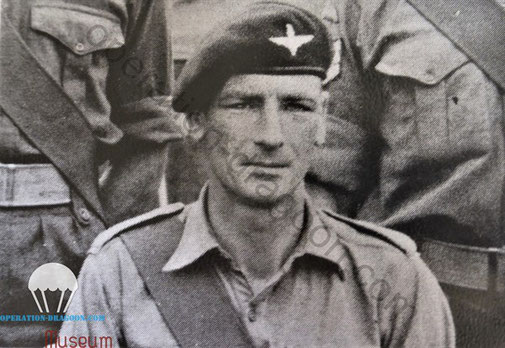
Sergeant TUCKER and the incredible story of the German Head-Quarter in La Motte. Southern France :
He joined the airborne in may 1943, from a Royal Artillery where he was a pre-war TA Sergeant, but willingly dropped a rank to do so.
After Hardwick and Ringway parachute school, he joined the 5th Scottish battalion in the summer of 1943 just in time to leave England for north Africa.
Once in the middle East he took part to the 1st Airborne division landing in Taranto and fought from november 43 to may 44 leading second platoon into the battle of Mount Cassino in the absence of the platoon commander who was away ill. He remainded platoon sergeant of 2nd platoons for the invasion of southern France and the greek campaign including the Battle of Athens.
Here is the incredible story of his jump in Southern France :
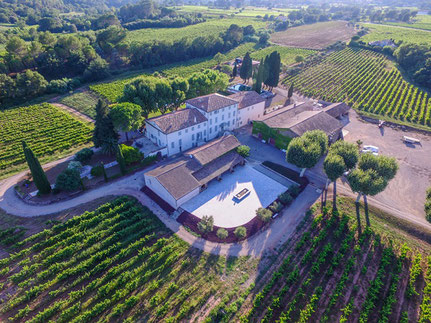
Sergeant TUCKER jump out of his airplane right in the middle of his pre-designated drop Zone. East of the little town of La Motte, a vigneyards and fields valley crossed by the river Nartuby at was about 4. 30 in the morning but he had the misfortune to land on the top of the roof of one german Head-Quarter at that time a Winery named Chateau Clastron. (actualy named Réva)
The H.Q was in fact the 6 royal welsh battalion objective. Completly blocked by the broken tuil roof and the wood framework, he had time to take out of his jump case his tommy gun.
TUCKER killed a adjudant and wounded tow german soldiers coming on to the roof to extract him.
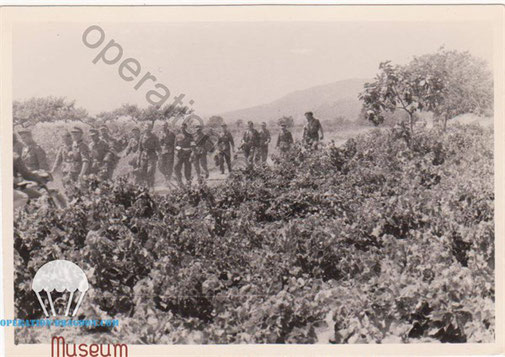
Other germans below in the house then made a hole in the roof close to him and warned him that if he did not surrender they would throw grenades under his feet. So sergeant TUCKER surrender and was then taken down to the guardroom where there were few other British paratroopers who had landed in a similar way to him. TUCKER, bluffed the germand and advised them to surrender as they were surrounded by tow allied airborne divisions. They did not swallow him at first bu few hours later on daylight, they look outside and saw hundreds paratroopers and gliders coming from the sky. After a talk between the officers the germans took his advice and sergeant TUCKER led the complete german Head Quarter of 81 prisoners with the few paratroopers landed there, leading the prisonners to Le Mitan Airborne division Head Quarter.
Unfortunatly during this march, the Private Gavin BURNS have benn killed
Effectivly, a german officer walking in the column hands up was hiding a small Walther PPK pistol on his collar jacket. He suddenly took it off at the time Burns was walking along him and shot him on his head.
TUCKER ordered to not shoot the officer right in the action as many men were close to him include other from the 5th battalion.
For that capture, Sergeant Bert TUCKER was deservedly mentioned in Despatches.
In October he was dropped with his unit in Greece and when the war ended he returned to civil life.
In 1947, he amongst the first to join the 11th para battalion in Ealing and was promoted B company Warrant Officer.
His experience , leadership and character were invaluable. He later moved to the 10th battalion then definiivly left the army and became supervisor working at Heathrow airport.
He retired in 1981, and passed away on the 13th of august 1991. We could never had talk this incredible and heroic story without the privilege of meeting and interviewed Colonel Robert CORBY and Colonel Georges CHRISTIE, ex officers of the glorious 5th Scottish battalion when they came back in Southern France in 1994. Thankyou Sirs for helping us to perpetuate the legacy of the parachute regiment
Le sergent TUCKER et l'incroyable histoire du quartier général allemand à La Motte. Sud de la France :
Bert TUCKER rejoint les parachutistes britanniques en mai 1943, il venait d'une unité de l' artillerie royale où il était sergent avant la guerre.
Après l'école de parachutisme de Hardwick et Ringway en Angleterre, il rejoint le 5e bataillon écossais dans l 'été 1943 juste à temps pour être envoyé en Afrique du Nord.
Une fois au Moyen-Orient, il prend part au débarquement de la 1re division aéroportée à Tarente en 1943 et combat de novembre 43 à mai 44 en Italie où il conduit le 2éme peloton à la bataille et l'attaque du monté Cassino en l'absence du commandant de peloton qui était malade.
Il reste sergent commandant du 2éme peloton pour l'invasion du sud de la France et la campagne grecque, dont la bataille d'Athènes.
Voici l'incroyable de son saut dans le sud de la France:
Le sergent TUCKER saute de son avion en plein milieu de sa zone de largage prédéterminée, à l'Est du petite ville de La Motte : Des champs de vignes traversés par la rivière Nartuby. Il était environ 4 h 30 du matin et il va avoir la malchance d'atterrir sur le toit du quartier général allemand dans un grand château viticole nommé Clastron (Chateau Réva de nos jours ). Le QG était en fait l'objectif du 6e bataillon aéroporté gallois. Complètement bloqué entre les tuiles et les chevrons, il a tout de même le temps de dégainer son pistolet mitrailleur Thompson et à le temps de tuer un adjudant et blesser deux autres hommes qui s'avançaient pour le maitriser.
D'autres Allemands montent alors les étages et font alors un trou dans la toiture proche de lui et le préviennent que s'il ne se rendait pas, ils lanceraient des grenades dans la partie de toit sous ses pieds. TUCKER va alors se laisser capturer et emmener au poste de garde où se trouvaient d'autres parachutistes britanniques qui avaient atterri non loin et étaient eux aussi prisonniers.
Après un court instant, le sergent TUCKER, avec le flegme britannique caractéristique vas conseiller aux Allemands de se rendre, argumentant au bluff qu'ils sont encerclés par deux divisions aéroportées alliées, les allemands ont du mal a le croire mais se mettent à parlementer de leur sors et celui des prisonniers.
Quelques heures plus tard, alors que le jour se lève, les allemands sortent sur le parvis du château et voient des centaines de parachutistes et de planeurs atterrir.
Par la force des choses, il vont suivre ses conseils, et déposer les armes.
Et voilà que le sergent TUCKER reprend sa mitraillette et aidé de ses quelques camarades forme une colonne de l'intégralité du quartier général allemand un total de 81 prisonniers à lui tout seul.
Il sera médaillé pour cet acte héroïque..
Malheureusement, le Private Gavin BURNS sera tué lors de l'acheminement des prisonniers vers hameau du Mitan. En effet, un des officier allemand, les mains sur la tête, sorti du col de sa veste un petit pistolet Walther et tua mortellement le parachutiste en pleine tête alors qu'il encadré le groupe.
À la fin de la guerre, le sergent TUCKER revient à la vie civile jusqu'à 1947 ou il décide de se ré-engager. Il rejoint le 11e bataillon para à Ealing et sera promu warrant officer de la compagnie B.
Son expérience, son charisme et son caractère ont été inestimables pour ses hommes. il sera ensuite muté au 10e bataillon, puis va définitivement quitter l'armée pour devenir superviseur à l'aéroport de Heathrow, Londres. Il a pris sa retraite en 1981 et est décédé le 13 août 1991. Son histoire n'aurai jamais pu être raconté sans notre rencontre et notre interview de ses freres d'armes, le colonel Robert CORBY et le Colonel Georges CHRISTIE, ex membres du 5em bataillon écossais lors de leur retour dans le sud de la France en 1994. Une pensée à ces héros et au parachutiste BURNS un des premiers soldat britannique tué lors de la libération de Provence.